What’s the latest on the Newberg mill site?
Published 5:00 am Friday, April 10, 2026
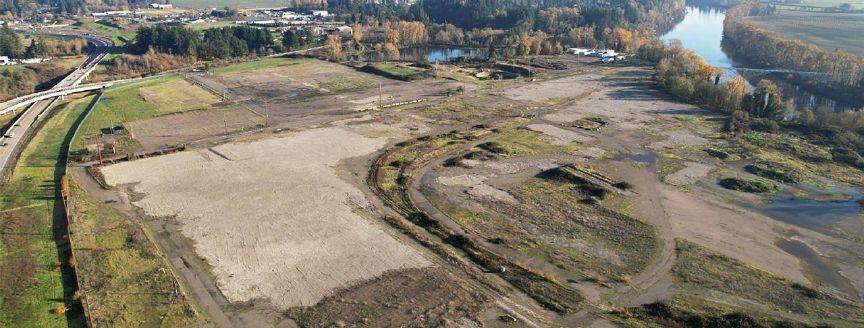
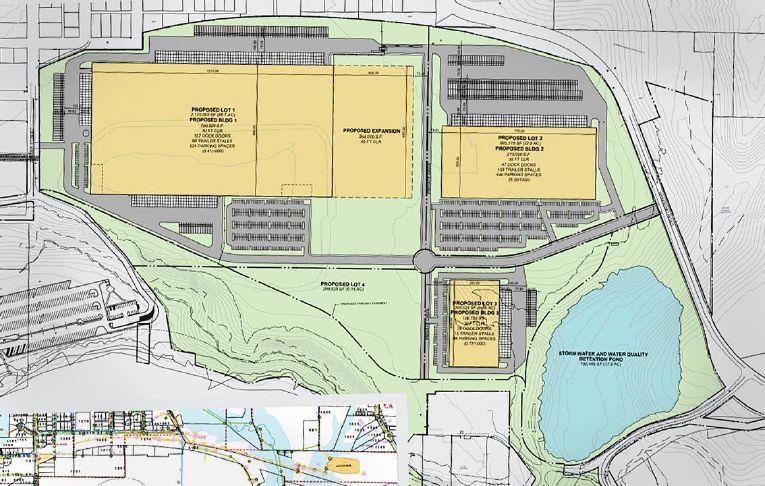
Attempts to sell the nearly 200-acre parcel of former mill land in Newberg have yet to bear fruit.
The land — where once stood a succession of lumber and newsprint-producing mills, the latest owned by the WestRock corporation — sits idle since the mill was purchased by a Missouri company and razed in 2020.
The Lake Oswego commercial real estate firm Macadam Forbes is the primary broker attempting to sell the land on behalf of the owner, St. Louis-based Commercial Development Company Inc.
But there have been no offers of late.
“I have had the property listed for sale and lease for approximately four months,” said Clayton Madey, the latest broker attempting to sell the land. “We have seen some interest, both in smaller chunks and the entire site, but there is nothing concrete yet and nothing under contract at this time.”
The parcel on South Wynooski Street totals 192.6 acres, of which 100 acres are flat, contiguous and usable, Madey said. He added that the land includes multiple tax lots and the portion within the city limits is zoned industrial and could be broken up into smaller parcels, if desired by buyers.
The asking price is $12 per square foot, which would total more than $100.3 million if the entire parcel was purchased.
The broker firm describes the parcel as a “large-scale industrial land opportunity” located in a region with ample utility services, flat topography, “a business-friendly municipality,” Willamette River frontage, proximity to multiple major markets in the state, direct rail service and multiple highways nearby.
It is zoned for manufacturing and production, warehouse and freight, industrial service, railyards, storage/self-storage, utilities/battery storage and data centers.
Whatever uses are located there will do so without the water rights the mill possessed before closing. The city of Newberg purchased the water rights from WestRock for $3.18 million several years ago.
In addition, rail service to the site could prove problematic as sections of the Blaine Street spur line that serviced the mill have been decommissioned. The mill site also surrounds the city’s aging water treatment plant, which the city plans to reconstruct over the next decade.
The parcel for sale also originally included a large tract of undeveloped land on Wynooski Street adjacent to the CalPortland concrete plant, a portion of Rogers Landing marine park and two tracts of residential land on either side of the Newberg-Dundee bypass. Much of that residential land has been developed since CDC purchased the property.
At the time of the sale, CDC released WestRock — which shuttered the plant in early 2016 — from responsibility for the environmental liabilities through its subsidiary, Environmental Liability Transfer. Since the 1880s, the land has held a series of lumber and newsprint mills and is likely to require extensive environmental cleanup.
City riverfront plan a separate issue
The city’s Riverfront District Master Plan, adopted in 2019 and amended in 2020, calls for development of land adjacent to the mill site into commercial, recreational and residential uses over the next several decades.
“The district plan calls for a riverfront pathway or promenade as well as local street connections, which are conceptual in nature and would be designed to complement any future development plan for the property,” said Scot Siegel, the city’s community development director.
The plan for a section that sits between the Newberg-Dundee bypass and the Willamette River would be to develop it into a commercial, residential and recreational zone that abuts the mill property on the east. If the plan wished to include the mill site, then the land would have to be rezoned by the county as it is designated for industrial use.
The sale of the land, however, is not contingent on convergence with the riverfront plan, Siegel stressed.
“There is no linkage between the Riverfront District Master Plan and sale of the former mill property …,” he said. “The properties held by CDC happen to comprise the largest industrial and mixed-use development opportunity in the district, though they could choose to break it up and sell it in any manner they want without the city’s approval.”