Central Oregon farmers, ranchers to learn from visiting business school
Published 1:30 pm Tuesday, October 6, 2026
|
Getting your Trinity Audio player ready...
|
Three Central Oregon producers will attend a nationally recognized business management school for farmers and ranchers, which will visit Bend during the last week of October.
High Desert Food and Farm Alliance, a local nonprofit working to improve the regional food economy, awarded $2,000 scholarships to three Central Oregon farmers and ranchers to attend Ranching for Profit School. The school operates at a handful of various locations across the country annually and will make its Central Oregon debut this year.
In the past, Central Oregonians had to travel out of state to participate, significantly increasing costs. Through the weeklong course, the program will help farmers and ranchers improve profitability, sustainable land and livestock health and business management. The application-based scholarships cover two-thirds of the tuition.
HDFFA Associate Director Ann Pistacchi-Peck said the organization hopes participants will share strategies and insights from the school with other local producers through blogs, workshops, presentations and casual conversations.
“The impact of these scholarships won’t stop with the three recipients. As part of receiving a scholarship, each producer has agreed to bring what they learn back and share it with other Central Oregon farmers and ranchers,” Pistacchi-Peck said. “It creates a ripple effect where an investment in three producers can ultimately benefit many more.”
Pistacchi-Peck said the recipients represent relatively young agricultural businesses who desire to build financially sustainable, long-term operations.
“(The recipients) are all at points where the business training offered through Ranching for Profit could have a really significant impact,” Pistacchi-Peck said.
Local farmers and ranchers seek business education
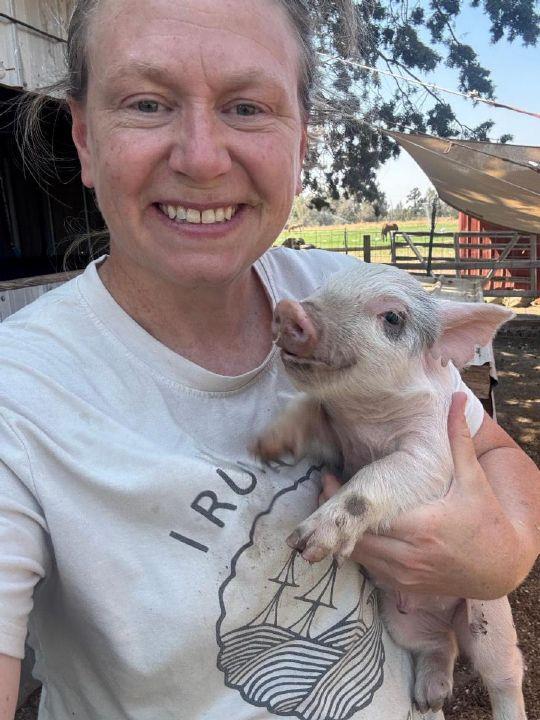
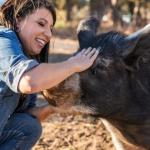
Courtney Riding of 3R Livestock and Land has worked with HDFFA through several programs as her family developed what began as a 4-H hobby farm into a commercial livestock operation in Redmond.
Riding operates her ranch alongside her husband and two teenage sons, raising pigs, goats and chickens for live sale and meat production. She looks forward to learning about succession planning for her kids, cutting expenses and which production lines to pursue.
“If we weren’t breeding animals, I could afford to go to the class,” Riding said. “But because I’m losing so much money on my small farm, I can’t afford to go without the scholarship. I’m so busy working to pay for feed to feed my animals, I can’t even enjoy them.”
She continued, “I have all of the passion in the world for raising animals, but I have no idea how to run a business.”
Riding said that because Central Oregon is geographically isolated from the rest of the state, regional farmers and ranchers face limited resources and opportunities. She intends to pass the knowledge she learns from the school to the 4-H children and first-time hobby farmers she sells livestock to.
“Our educational opportunities, I believe, are limited by being remote,” Riding said. “With (Ranching for Profit School) bringing that opportunity here, it makes it possible for us to attend that without having to incur travel costs and lodging costs, and of course, leaving livestock is not an easy thing.”
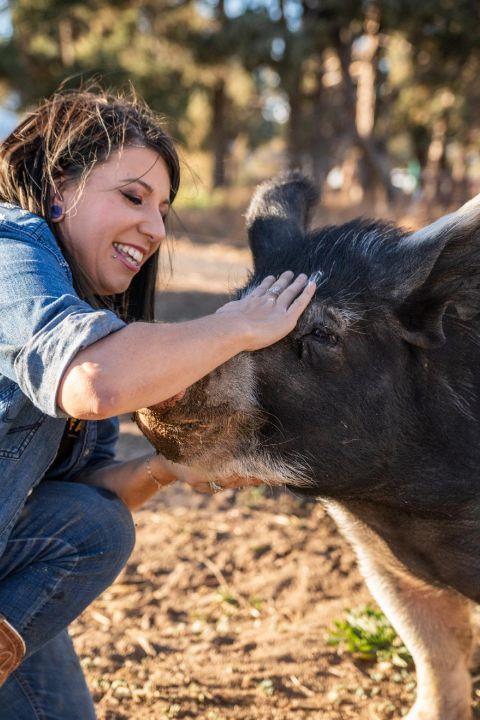
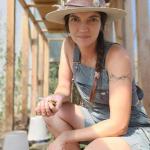
Kate Grace, who owns Lost Grace Farm in Bend, raises quail for eggs, grows mixed vegetables and offers agricultural education to the public. Grace plans to build a fully operational food system that will last for decades and hopes to add sheep and bison in the next several years.
She hopes the school will help her move towards “full-time farm life” and bridging the gap between her business and farm education.
“It’s a big deal. This is a great way to get to know what resources are available nationally, internationally and how to transform our product into a functional food system,” Grace said. “We’re such a little desert island in the West. It’s really cool to have (Ranching for Profit) come out here and recognize that we’re a farming community, have a history of ranching and to bring everybody into the high desert to see our farm world.”
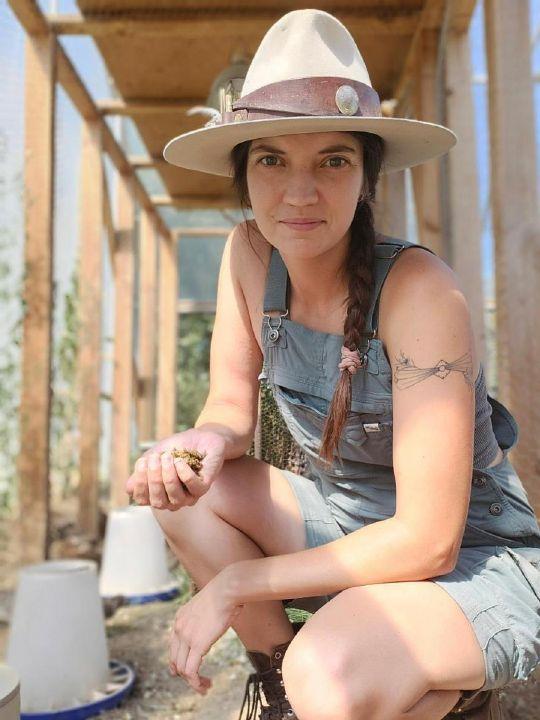
Zoey Oquist co-owns The Crow’s Croft, a rapidly growing ranch in Redmond recognized for its pasture-raised pork and handcrafted lard-based products. Oquist and her partner currently balance full-time off-farm careers while building their agricultural business.
“One of my biggest goals is to transition from balancing a full-time career and farming to making our farm my full-time career,” Oquist said in a press release. “I’ve learned that it takes more than hard work. It takes understanding the financial side of ranching, making sound management decisions, and using our time and resources wisely.”
Nonprofit needs to replace lost federal funds
Considering local producers struggle to access the resources they need, Pistacchi-Peck said HDFFA wanted to increase Central Oregonians’ access to the Ranching for Profit School.
The donor-funded scholarships are testaments to the importance of private donors as federal funding for HDFFA’s agricultural programs continue to decline, Pistacchi-Peck said.
“Support like that allows us to keep investing directly in local farmers and ranchers and make sure they continue to have access to the training, resources and financial support that can make a real difference for their businesses,” Pistacchi-Peck said.
The most significant recent cut to the nonprofit’s agricultural programs occurred in March, when HDFFA lost a $300,000 federal grant they had already been awarded, Pistacchi-Peck said. They expected to invest that money in business and technical assistance and education for Central Oregon farmers and ranchers. The organization is currently working to replace lost federal funding with foundation grants and private philanthropy.